Best eSIM for Argentina 2026: 9 Plans Ranked for Buenos Aires, Patagonia and the Long Empty Roads
Looking for the best eSIM for Argentina in 2026? We compare 9 providers by data pricing, local network access and coverage limitations across Buenos Aires, Patagonia and Ruta 40. Check available discounts and coverage gaps before choosing a plan.
November 3, 2026
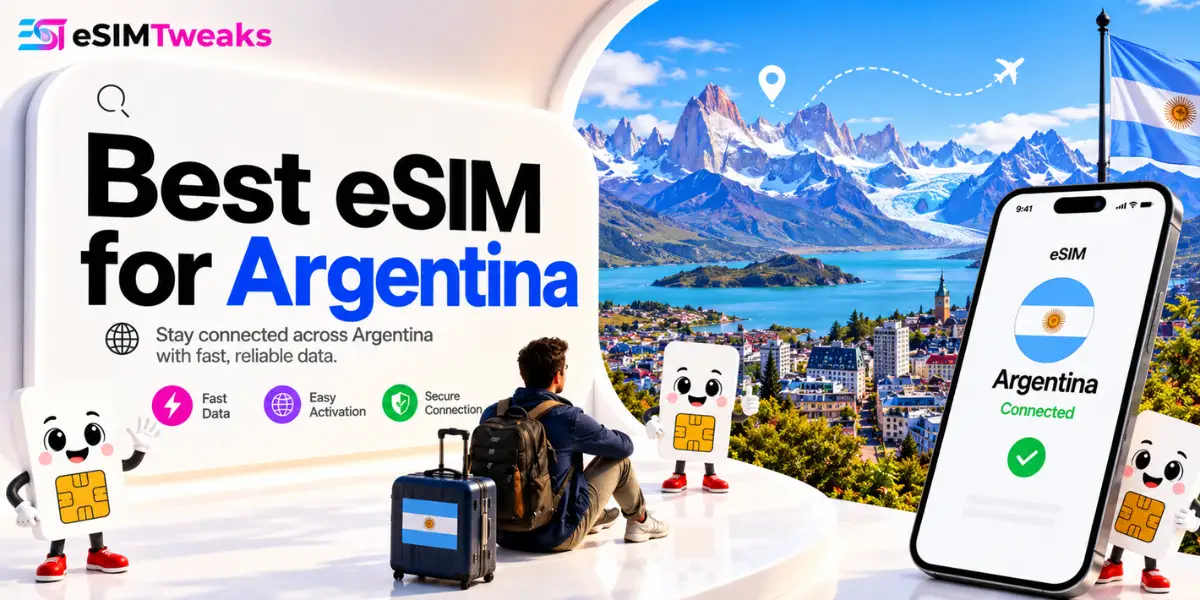
Argentina is 2,300 miles from top to bottom and most of it is empty.
That single fact decides which eSIM you should buy, and it produces a conflict the national statistics do not show.
Opensignal’s testing puts Personal ahead on every measure. Every field account from Patagonia names Claro. Both are right: Personal is faster where it exists, and Claro exists in more places.
Ruta 40 has gaps of 200 to 300 kilometres with no signal at all. El Chaltén did not get mobile data until late 2022.
Ruta 52 to the Salinas Grandes has nothing for about 95% of its length. None of that shows up in a median download figure.
We compared nine providers to find the best eSIM for Argentina in 2026, ranking each by price per gigabyte, local network access and coverage limitations.
From Buenos Aires to Patagonia and Ruta 40, here’s what to check before choosing a plan. Prices shown are standard rates before discounts.
Prices are standard rates before any code.

Top 3 eSIMs for Argentina
Bottom line:

RedteaGO
- 10GB for $20.80 over 60 days
- Best long-trip value in Argentina
- Great for Ruta 40 itineraries
- Data sharing supported
Latam Travellers
- Latin America focused provider
- Cheap entry plans for short trips
- Strong fit for multi-country routes
- Great Buenos Aires to Mendoza option

aloSIM
- Runs on Claro LTE in Argentina
- Bundled Hushed phone number
- Better fit for Patagonia road trips
- Named network is a real advantage
All three providers offer Argentina plans suitable for trips to Buenos Aires, Mendoza, Bariloche and Salta, but coverage depends on the local network and your exact location.
If you’re driving Ruta 40, check the coverage section below before buying.
Price comparison: all 9 Argentina eSIMs
| Provider | 1GB | 5GB | 10GB | 20GB | Best cost per GB | Runs on | Code |
|---|---|---|---|---|---|---|---|
| RedteaGO | $4.80 / 30d | $10.80 / 30d | $20.80 / 60d | $36.80 / 90d | $1.72 | Local networks | RTGF95CDO |
| Latam Travellers | $3.57 / 7d | $12.74 / 30d | $21.91 / 30d | n/a | $2.19 | Local networks | ESIMADVICE10 |
| MobiMatter | N/A (3GB starts at $9.99) Copy | $13.99 / 30d | $24.99 / 30d | $39.99 / 30d | $2.00 | Local networks | ESIMDUDE |
| aloSIM | $4.50 / 7d | $23.50 / 30d | $39.00 / 30d | $46.00 / 30d | $2.30 | Claro | ESIMTWEAKS |
| Saily | $5.29 / 7d | $16.99 / 30d | $29.99 / 30d | $46.99 / 30d | $2.35 | Movistar | ESIMDUDE |
| Airalo | $6.00 / 7d | $23.50 / 30d | $42.00 / 30d | $49.00 / 30d | $2.45 | Movistar | ESIMADVICE15 |
| Sim Local | $4.75 / 3d | $13.50 / 30d | $38.25 / 30d | $52.25 / 30d | $2.61 | Local networks | ESIMDUDE10 |
| Maya Mobile | unlimited only | unlimited only | unlimited only | unlimited only | N/A (Unlimited; from $1.67/day) | Local networks | ESIMTWEAKS10 |
| Yaalo | $8.09 / 3d | $32.60 / 30d | $59.13 / 30d | $102.97 / 30d | $5.15 | Local networks | ESIMBROS |
Yaalo charges $59.13 for the 10GB that RedteaGO sells for $20.80 with a sixty day window attached.
Prices vary widely across Argentina eSIM providers. A higher price doesn’t automatically mean better coverage, so compare the supported local network, data allowance and validity before paying more.
Argentina has three networks and one of them is being broken up
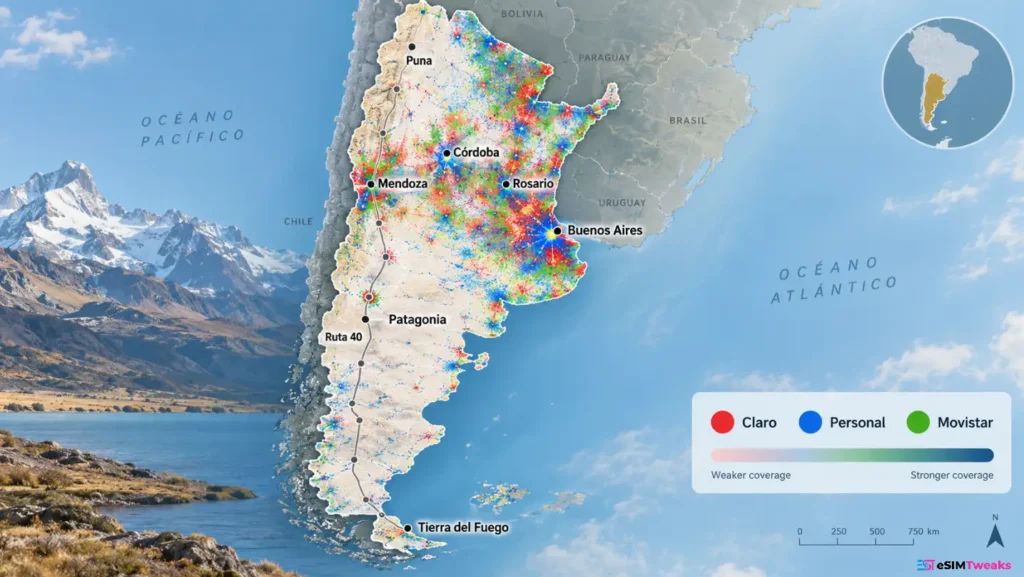
Claro is worth considering for Patagonia, but coverage varies by location. It held 41.8% of the market before the current restructuring and it is the network that turns up in Patagonian villages when the others do not. El Chaltén got its first mobile data from Claro in late 2022.
If you’re travelling south of Bariloche into Patagonia, consider an eSIM that supports Claro, such as aloSIM, where available.
However, even Claro has coverage gaps along remote routes. Check the operator’s coverage map and your eSIM’s supported network before purchasing.
Personal is the fastest. In Opensignal’s last full Argentina report it swept every single award, with a download experience of 27.3 Mbps against Claro’s 20.9.
It held 33.8% of the market. The catch is where it exists: field accounts put Personal nowhere in El Chaltén and dropping out south of Puerto Madryn.
Movistar is the one in transition, and it is the one most travel eSIMs ride. It held 24.4% of the market. Telecom Argentina bought Telefónica’s Argentine mobile business for $1.245 billion in February 2025, and in June 2026 regulators ordered Telecom to hand roughly six million customers plus spectrum to an independent buyer inside eighteen months. Airalo, Saily and Nomad all ride Movistar in Argentina.
The 3.5 GHz auction in October 2023 raised $875 million. Claro and Telecom each took 100 MHz for around $350 million, Telefónica took 50 MHz for $175 million, one lot went unsold, and the licences run twenty years.
Ookla puts Argentina’s median mobile download at 60.40 Mbps at the end of 2025, up 75.2% in a year. That is a big jump and it reflects the C band build in the cities.
Practical version: Personal for speed in the cities, Claro for existence in Patagonia, Movistar because it is what most eSIMs sell you. For a Buenos Aires and Mendoza trip any of them is fine. For a Ruta 40 road trip, the network on the box matters more than the price.
Travel eSIM, local SIM or your own carrier?
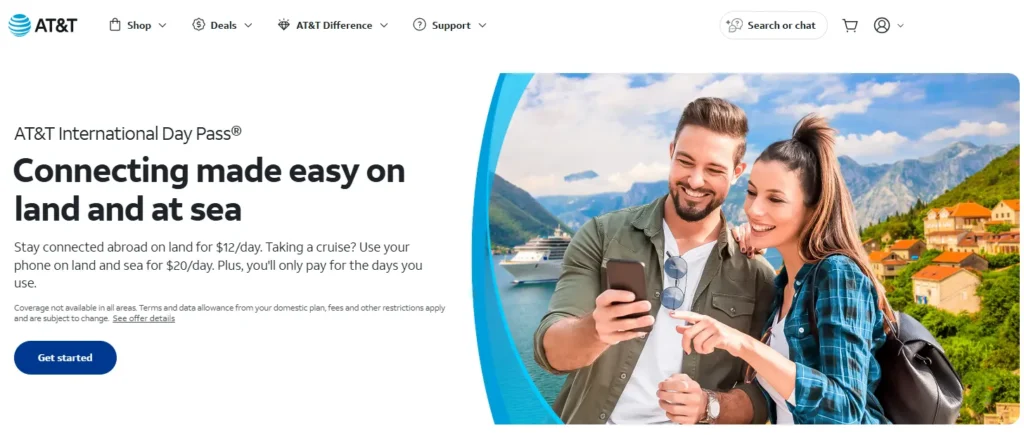
Your home carrier charges $12 a day. That is both AT&T’s International Day Pass and Verizon’s TravelPass rate for Argentina.
A two week trip is $168 per line. T-Mobile sells a $50 pass with 15GB over ten days, which is the one competitive carrier product here. Run your own numbers through our roaming versus eSIM calculator.
A local SIM is cheap and the registration step is where people fail. You do not need a DNI. All three operators accept a passport.
What you do need is for the line to actually be registered, and the classic failure is buying a chip from a kiosco that sells it unregistered, then discovering it never activates.
Claro’s Chip Turista gives 25GB over 30 days for around 20,500 pesos, roughly $13.59. That is remarkable value and it puts you on the network with the widest Patagonian reach.
The obstacle is buying it properly: Personal Flow runs the only official stand at Ezeiza, at check in area 40 and card only, and Claro has none at the airport.
So the plan with the best coverage is also the one you cannot buy on arrival without going into the city.
Argentine peso prices also move quickly, so treat any local figure as a snapshot and check the dollar equivalent.
A travel eSIM installs before you fly and works when you land, with no registration, no kiosco and no argument in Spanish about why the chip does not work. That convenience is most of the case for a travel eSIM Argentina plan over a local chip.
Hot tip: at Iguazú, phones routinely latch onto Brazilian and Paraguayan networks while you are standing on the Argentine side.
On an Argentina only plan that means no service in the middle of a national park.
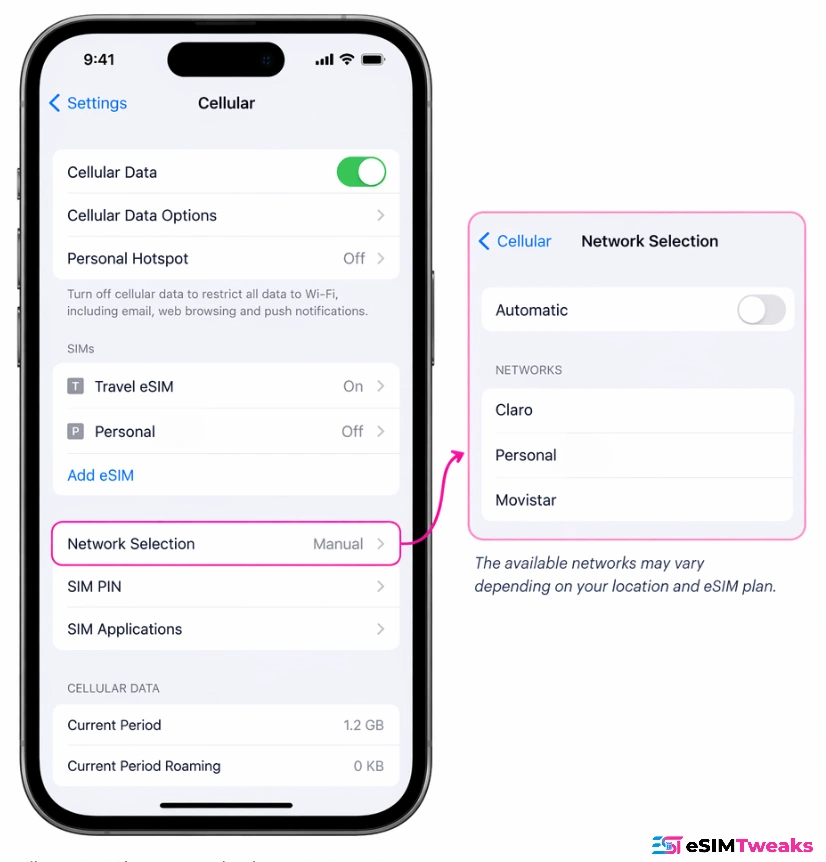
Set network selection to Manual and pick your Argentine operator by name before you walk to the falls.
The 9 best eSIMs for Argentina
Ranked on price per gigabyte, the network each one rides, and what happens when the data runs out. Every plan is data only unless we say otherwise.
1
RedteaGO
Argentina is a country of long trips, and RedteaGO is the only brand here that prices for one.
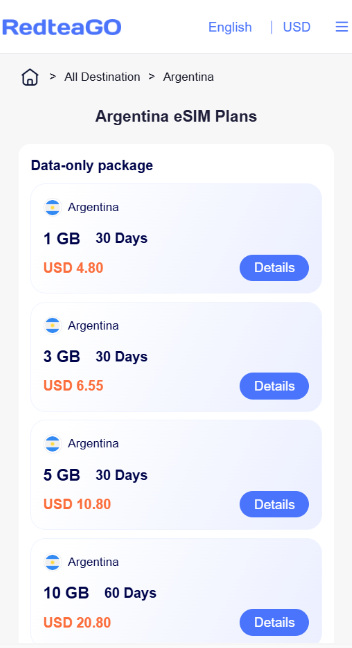
1GB is valid 30 days at $4.80. 3GB is valid 30 days at $6.55. 5GB is valid 30 days at $10.80. 10GB is valid 60 days at $20.80.
20GB is valid 90 days at $36.80. 50GB is valid 180 days at $85.80.
RedteaGO offers competitive prices across several data sizes, with longer validity periods on its larger plans. That 20GB ninety day plan at $1.84 per gigabyte covers a full Patagonian summer. The 50GB six month tier at $1.72 is the lowest rate on this page.
Compare like for like at 10GB: RedteaGO charges $20.80 for sixty days, Airalo charges $42.00 for thirty.
Same data, half the price, double the window.
Data sharing is supported. What you give up is app polish and support depth against the premium brands, and the host network is not one you can choose.
For an itinerary that runs Buenos Aires, then a month working its way down Ruta 40, then Ushuaia, one purchase covers the whole thing.
What we like
What we don’t
2
Latam Travellers
Latam Travellers sells Latin America and nothing else, and it shows in the plan shapes and the price.
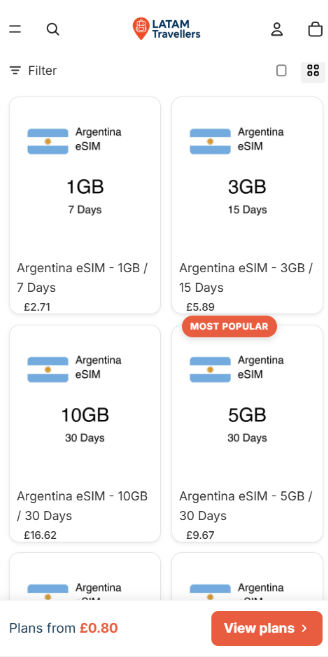
1GB for seven days costs $3.57. 3GB for fifteen days costs $8.15. 5GB for thirty days costs $12.74. 10GB for thirty days costs $21.91.
That $3.57 entry is the cheapest single plan on this page, and 10GB at $2.19 per gigabyte is second only to RedteaGO among the fixed thirty day plans.
For a two week Buenos Aires and Mendoza trip, or a Buenos Aires stopover on the way to somewhere else, it is the sensible buy.
The other advantage is the shape of a South American itinerary. Argentina rarely stands alone: it gets combined with Chile for Patagonia, with Uruguay for a Colonia day trip, with Brazil for Iguazú.
A specialist that sells each country separately at a fair price often beats one expensive regional bundle, and our multi country optimiser will tell you which way round it falls on your route.
The same logic drives our Costa Rica and Peru guides.
The ladder stops at 10GB, so a month of tethering means stacking plans.
What we like
What we don't
Latam Travellers sells Latin America and nothing else, and it shows in the plan shapes and the price.
3
MobiMatter
MobiMatter is a marketplace and in Argentina it has the best large plan pricing from a mainstream storefront.
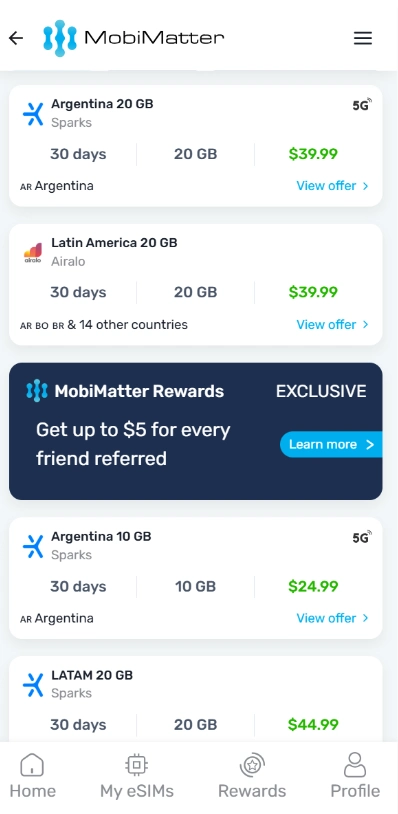
3GB for thirty days at $9.99. 5GB for thirty days at $13.99. 10GB for thirty days at $24.99. 20GB for thirty days at $39.99. That 20GB tier at $2.00 per gigabyte is the best twenty gigabyte figure on this page.
It also lists an Airalo Latin America seventeen country product at 3GB for $11.99 up to 20GB for $39.99, and a global thirteen gigabyte plan valid a full year at $41.99, which is an odd and useful shape for someone who visits South America repeatedly.
Hotspot and tethering are allowed on every listed Argentina plan, which is worth stating because it is not universal and because Argentine accommodation wifi is patchy outside the cities.
Being a marketplace, listings vary by seller. Read the specific tier you are buying, and support runs through MobiMatter rather than whoever provisioned the profile.
What we like
What we don't
The platform is covered in our MobiMatter review.
4
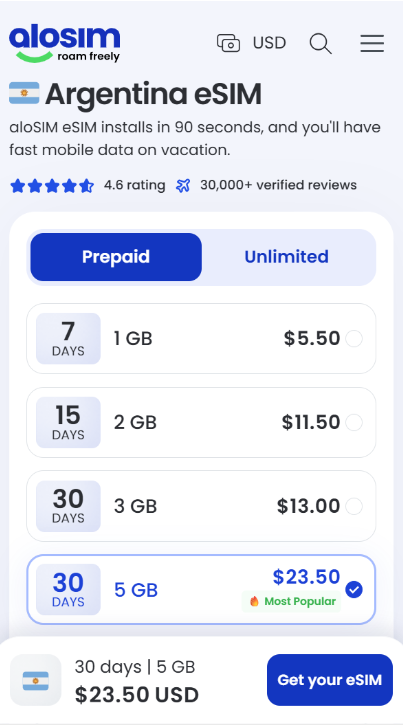
aloSIM
Runs on Claro LTE. Code ESIMTWEAKS for 10% off.
If your trip goes south, this is the one to look at, because aloSIM names Claro and Claro is the network that reaches Patagonian towns the others skip.
Pricing is mid to high. 1GB for seven days at $4.50. 2GB for fifteen days at $11.50. 3GB for thirty days at $13.00.
5GB for thirty days at $23.50. 10GB for thirty days at $39.00. 20GB for thirty days at $46.00. The 20GB tier at $2.30 per gigabyte is the one worth buying; the 10GB tier is poor value beside it.
There is an unlimited line priced by duration and given proper names: Weekender at three days for $20, Extended Stay at five days for $29,
Week Getaway at seven days for $35, Traveller Plus at ten days for $39.50, Great Escape at fifteen days for $47 and Month Abroad at thirty days for $97.
The genuine differentiator is that every aloSIM plan bundles a free Hushed number. Every other plan on this page is data only.
In Argentina that matters more than usual, because a remise driver in Salta or a hostel owner in El Bolsón will try to phone you, and an app call does not always reach.
What we like
What we don't
If your trip goes south, this is the one to look at, because aloSIM names Claro and Claro is the network that reaches Patagonian towns the others skip.
5
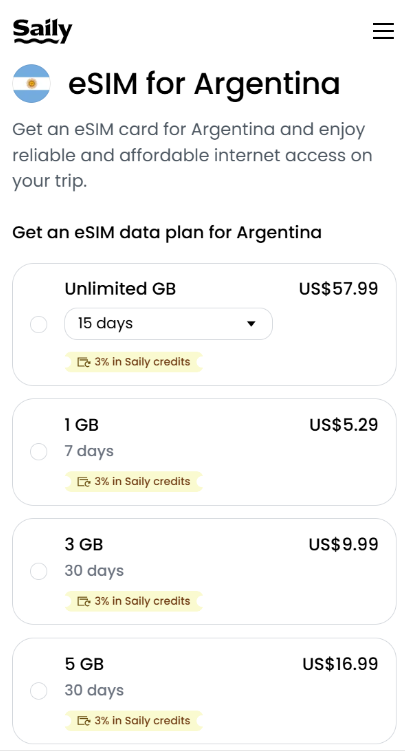
Saily
Runs on Movistar. Saily comes from the NordVPN team and it is the most polished product in this group.
1GB for seven days at $5.29. 3GB for thirty days at $9.99. 5GB for thirty days at $16.99. 10GB for thirty days at $29.99. 20GB for thirty days at $46.99. Unlimited runs $57.99.
Three things justify the premium over a marketplace listing. Hotspot has no restrictions at all, which matters on a long road trip with a laptop in the passenger seat.
Plans activate automatically when you arrive rather than when you pay, with a 180 day window between purchase and activation. And refunds are supported on unused profiles.
That 180 day window is worth real money on an Argentina trip. Domestic flights get cancelled, Patagonian weather rearranges itineraries, and a plan bought in October for a January trip is still fine.
The 3GB tier at $9.99 is the value point in this ladder. Above that, RedteaGO and MobiMatter are cheaper for the same data.
What we like
What we don't
The current stack sits on our Saily coupon code page.
6
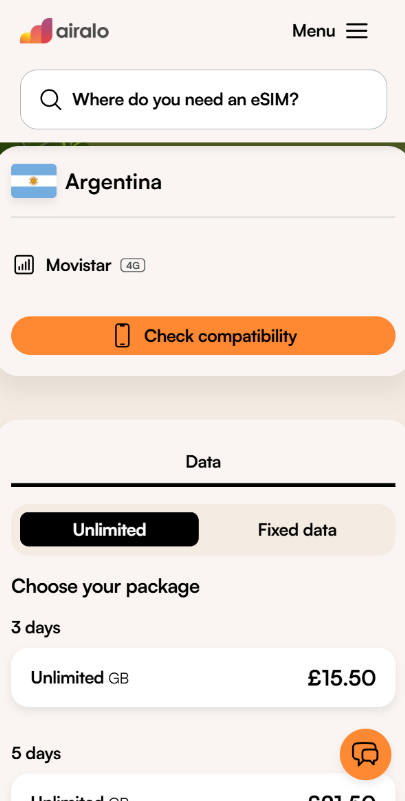
Airalo
Runs on Movistar.
Airalo rides Movistar in Argentina and charges the most of any mainstream brand here for fixed data.
1GB for seven days at $6.00. 2GB for fifteen days at $11.50. 3GB for thirty days at $15.50. 5GB for thirty days at $23.50.
10GB for thirty days at $42.00. 20GB for thirty days at $49.00. There is also an unlimited line at $20.00 for three days, $29.00 for five, $35.00 for seven and $39.50 for ten.
That 10GB price is the one to notice. It is double RedteaGO and 68% above MobiMatter, and the 20GB tier at $49.00 is the point where the ladder starts making sense again.
Where Airalo earns its keep in South America is the Latin America regional plan, which covers seventeen countries.
For the Patagonia trip that crosses into Chile at Paso Roballos or the Iguazú trip that spends a day in Brazil, one profile across the region is worth more than the cheapest single country plan. Unlimited regional tiers run $19.50, $30.50 and $97.00.
You also get the largest support operation in the industry and an app that works in almost every country you will ever visit.
What we like
What we don't
Current stacking sits on our Airalo promo code page, and the full Airalo review covers the app.
7
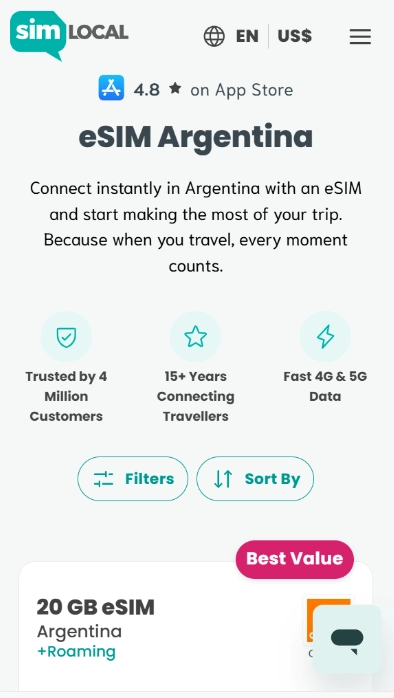
Sim Local
Code ESIMDUDE10 for 10% off.
Sim Local is a Dublin company with airport shops across Europe, and its Argentina ladder is the strangest shape on this page.
1GB for three days costs $4.75. 5GB for thirty days costs $13.50. Both of those are competitive, and the 5GB tier at $2.70 per gigabyte beats every premium brand here.
Then it jumps. 10GB costs $38.25 and 20GB costs $52.25. Doubling from 5GB to 10GB costs $24.75, which is more than the 5GB plan itself.
So the rule is simple: buy Sim Local at 1GB or 5GB and buy somewhere else above that.
For a week in Buenos Aires with a day trip to Colonia, $13.50 is a good price with round the clock chat and WhatsApp support behind it.
What we like
What we don't
8
Maya Mobile
Code ESIMTWEAKS10 for 10% off.
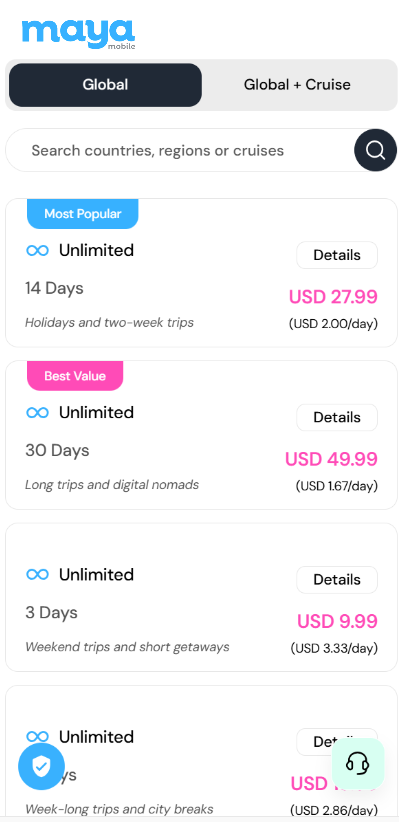
Maya sells no fixed data plan for Argentina. It sells unlimited by duration, and it wins on the number that matters when you are a long way from a router.
After the 5GB daily cap, Maya runs at 3 Mbps. Most of this page falls to 1 Mbps or worse. Three megabits still runs offline map updates, holds a video call and uploads a photograph, and it is the only post cap speed here you could work on.
Pricing is $9.99 for three days, $19.99 for a week, $27.99 for fourteen days and $49.99 for thirty, covering 165 or more countries on one profile with hotspot included. At full daily use the thirty day plan works out at $1.67 a day.
For a Patagonia trip that crosses into Chile repeatedly, one profile that covers both without thinking about borders has real value, and the same profile carries on to Brazil or Uruguay.
The catch is that half a Patagonian itinerary is spent outside coverage, so you will not use 5GB a day. For an Argentina only trip, RedteaGO's 20GB at $36.80 does more for less.
One setting to get right. Maya plans auto renew while Travel Mode is on. Switch it off when you get home.
What we like
What we don't
The current rate sits on our Maya Mobile coupon page.
9
Yaalo
Yaalo is a Florida company with a working app on both stores and a product that connects in Argentina. We include it because we hold a code and because the price sheet deserves a warning.
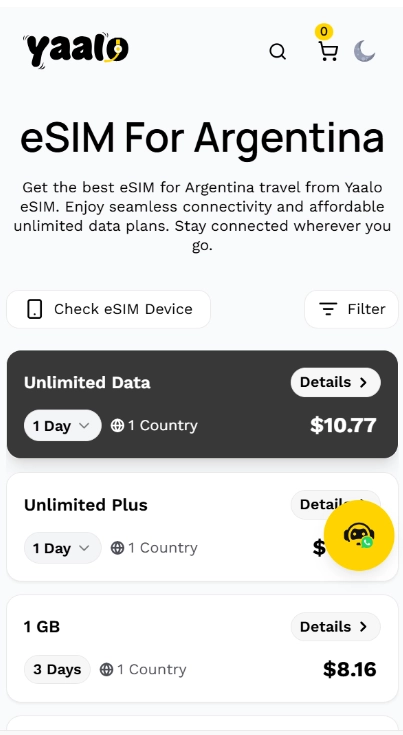
1GB for three days costs $8.09. 3GB for thirty days costs $20.83. 5GB for thirty days costs $32.60. 10GB for thirty days costs $59.13. 20GB for thirty days costs $102.97.
RedteaGO charges $20.80 for 10GB with a sixty day window. Yaalo charges $59.13 for thirty days. That is nearly three times the price for half the window.
The unlimited line runs $10.68 for one day, $26.11 for three, $55.36 for seven, $96.05 for fifteen and $167.57 for thirty, with a set full speed allowance per 24 hours and reduced speed after.
Even after the 10% code, the 10GB plan lands at $53.22.
Hotspot is supported on most devices and the app works. If every other plan on this page sold out on the same afternoon, Yaalo would get you online. That is the case for it.
What we like
What we don't
Where the signal actually dies in Argentina?
Coverage follows the population, and the population is in the north and along a few corridors. Everything else is a long drive between towers.
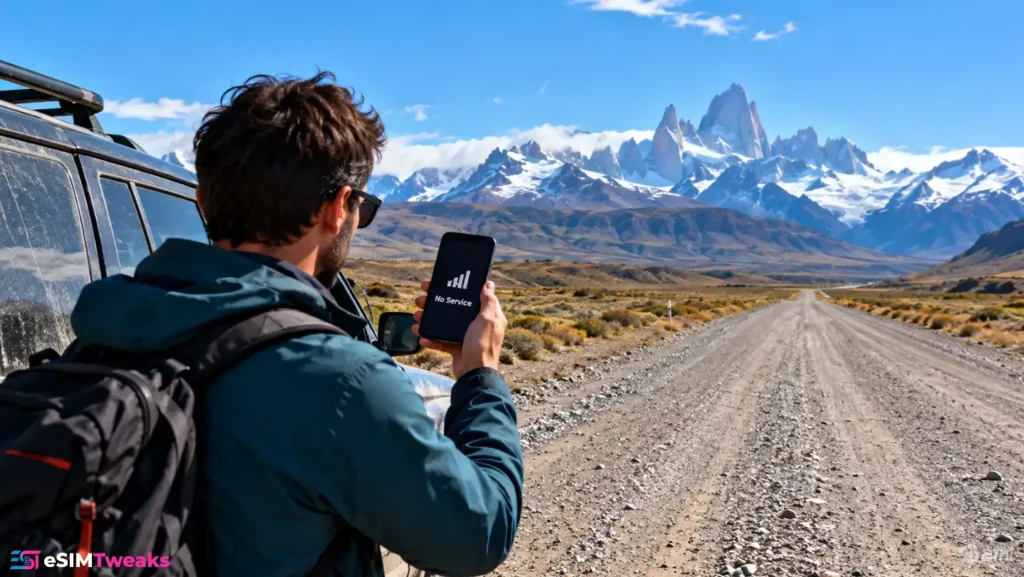
Our coverage checker shows which networks each profile can reach before you pay, and in Argentina that is thirty seconds well spent.
How much data do you need in Argentina?
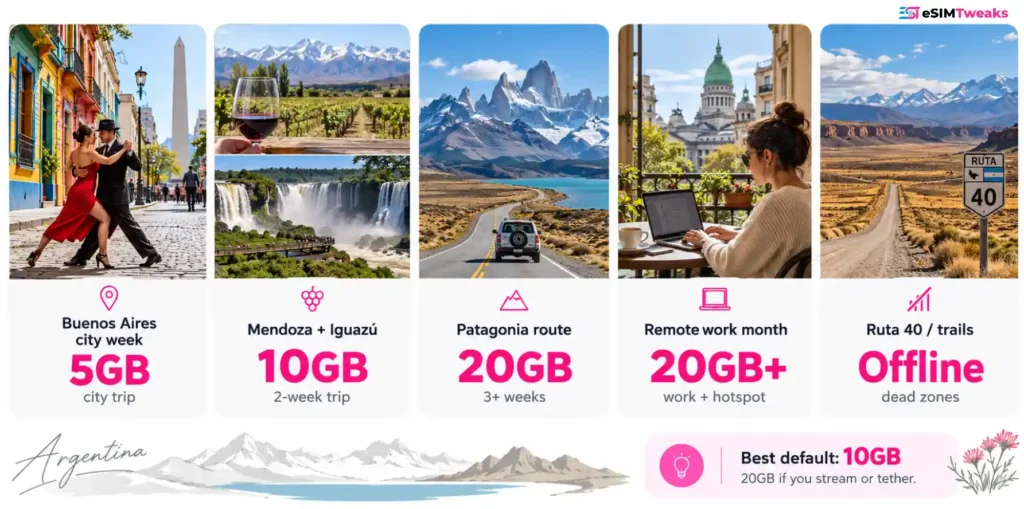
Here is the Argentina specific adjustment worth making. Because half a Patagonian itinerary has no coverage, real usage skews well below what a European or Asian trip of the same length would burn.
Most travellers run 500 MB to a gigabyte a day in the cities and almost nothing on the road.
10GB over 30 days is the sensible default. Buy 20GB only if you stream or tether a laptop.
Downloaded offline maps cut navigation to a few megabytes an hour. Our data planner does the sums exactly.
Setting up before you land
Do this at home on wifi, not in the Ezeiza arrivals hall.
Five mistakes that cost people money here
FAQ
Which network should I actually choose for a Patagonia road trip?
Claro, and it is worth paying more for. National testing puts Personal ahead on speed, but speed is the wrong metric south of Bariloche. El Chaltén received its first mobile data from Claro in late 2022 and Personal is absent there. On this page aloSIM and Amigo are the brands that name Claro. If you are on a plan riding Movistar or an undeclared network, treat every Patagonian town as a possible dead spot and download everything before you leave the last city.
Do I need an Argentine phone number for anything as a tourist?
For apps, no. Uber, Cabify and DiDi all authenticate through your existing account and all operate in Buenos Aires. The friction is elsewhere. MercadoPago, which a large share of the country pays with, is effectively closed to visitors without a DNI, so you will be using cash and cards more than locals do. And a driver, a hostel or an estancia trying to reach you will dial a number, not open an app. aloSIM is the only plan on this page that bundles one.
Will my eSIM work on the crossing into Chile for Torres del Paine?
Not on an Argentina only plan. The moment you clear Chilean immigration at Cerro Castillo or Río Don Guillermo your profile has no permission to attach and reads no service. Inside the park itself roughly 95% has no signal on any network, and the refugios sell satellite wifi at $10 to $30 a session. If Patagonia crosses the border, buy a Latin America regional plan or add a Chile profile. Airalo's seventeen country regional plan and Maya's global product both cover both sides.
Why do Argentine local SIM prices look so cheap compared to eSIMs?
Because they are, and because the peso moves fast. Claro's Chip Turista carries 25GB over 30 days for around 20,500 pesos, roughly $13.59, which no travel eSIM approaches. The catch is buying one properly. Registration is mandatory, a passport is accepted, and the standard failure is a chip bought from a kiosco that was never registered and never activates. Personal Flow runs the only official airport stand at Ezeiza and Claro has none, so getting the best local deal means a trip into the city.
Do the long distance buses have usable wifi?
Some do, and the route decides more than the operator. The Buenos Aires to Mendoza and Buenos Aires to Iguazú corridors stay near towns and towers, so a bus with wifi will mostly work. The southbound runs toward Bariloche and down Ruta 3 spend hours in country with no towers to reach, and onboard wifi cannot invent a signal. On a twenty hour bus, download your entertainment beforehand and treat any connection as a bonus.
Is Argentina's mobile network getting better or worse right now?
Better on speed, unsettled on structure. Ookla measured the median mobile download at 60.40 Mbps at the end of 2025, up 75.2% in a year, driven by the C band spectrum bought in the 2023 auction. At the same time Telecom Argentina's purchase of Telefónica's mobile business triggered a regulatory order in June 2026 to hand about six million customers and spectrum to an independent buyer within eighteen months. For a visitor that changes nothing this year, but it means any statement about which brand owns which network has a shelf life.
Our verdict
Argentina is cheap to get online in and expensive to get wrong, because the country where the signal disappears is exactly the country you flew there to see.
Buy RedteaGO for almost every Argentina trip. 10GB over 60 days at $20.80 or 20GB over 90 days at $36.80 with RTGF95CDO for 5% off is the cheapest Argentina eSIM card on this page and the long window suits a country this size.
Buy aloSIM if your route goes deep into Patagonia and you want the network most likely to find you. 20GB at $46.00 with ESIMTWEAKS for 10% off, riding Claro, costs more and buys a real chance of signal in El Chaltén, plus a phone number nobody else here includes.
Those are our best Argentina eSIM picks. Still deciding?
Our eSIM finder picks one for you in under a minute, our provider comparison puts the ladders side by side, and if Argentina sits alongside Chile, Brazil or Mexico on your route, the multi country optimiser works out whether one regional bundle beats separate country plans.
Why trust eSIMTweaks.
59 providers tested.
388 speed tests run.
20 countries covered.
More like this




About the author

Head of Network Testing
I lead field testing at eSIMTweaks, conducting speed, latency and reliability trials on live networks across Latin America and Southern Europe. In the past year I evaluated more than 60 eSIM profiles under real travel conditions. Every performance figure we publish originates from testing I run or supervise.