Ubigi Review 2026: Great Network, Risky Travel Choice
This Ubigi eSIM review covers a brand that is not a reseller. It runs its own core network, it is majority-owned by NTT, and its connectivity ships built into BMWs. That buys real advantages. It also has a failure mode that leaves you staring at five bars of 5G with nothing moving.
September 8, 2026

Ubigi
Ubigi offers a 3GB data plan for $9.00, valid for 30 days, with access to Telcel and Altan Redes networks in Mexico. It’s ideal for vacations, road trips, and remote work, and comes with a 10% discount.
Pros
- 30-day validity
- Access to Telcel and Altan Redes
- 10% off deal
- Suitable for remote work
Cons
- No hotspot or calls
- Limited to 3GB data
The short answer: Ubigi is one of the two or three best travel eSIMs in the world when it works, and it works about seven times out of eight. Buy it for Japan, Western Europe, Korea and Australia.
Avoid it for Mexico, Africa and the Middle East, where the pricing is indefensible. And never rely on it as your only line in Turkey or the UAE, because Ubigi’s own app and website are unreachable from inside both countries.

Exclusive Ubigi Deal
Ubigi Coupon: ESIMADVICE
10% off any Ubigi data plan Applies to one-off country, regional and global plans.
Enter it at checkout before paying.
- Country plans
- Regional plans
- Global plans
- 10% OFF


Ubigi at a glance
| Specification | Details |
|---|---|
| What it is | Consumer travel eSIM brand of Transatel |
| Owner | Transatel SA, France, majority-owned by NTT since February 2019 |
| Type | Full MVNO with its own core network, not a reseller |
| Founded | Transatel 2000, Ubigi brand launched 2017 |
| Coverage | 200+ destinations, 300+ operator agreements, 3 million users |
| 5G | 67 destinations, under a third of the catalogue |
| Names its host networks? | Yes, publicly, per country. Rare and genuinely useful |
| Cheapest 10GB month | France at $10, or $9.00 with ESIMADVICE |
| Most expensive 10GB month | Mexico at $29, nearly three times France |
| Unlimited model | Volume per plan period, not a daily cap. 15GB to 60GB, then 2 Mbps |
| Hotspot | Allowed, no separate cap |
| Refunds | Void the moment any data is used. One megabyte kills it |
| Support | AI assistant first, ticket form second. No phone, no in-app support |
| Trustpilot | 4.1 from 44,432 reviews. 66% five star, 12% one star |
| App | 4.6 on iOS, 3.8 to 4.0 on Google Play |
| Verdict | Excellent product, poor support, and a catalogue that contradicts itself |
What Ubigi actually is, and why it matters?
Almost every travel eSIM brand is a shop front. It buys wholesale capacity from an aggregator, wraps it in an app, and sells it on.
Nothing wrong with that, but it means the brand has no control over what happens on the network and usually cannot even tell you whose towers you are on.
Ubigi sits a layer deeper. It is the consumer face of Transatel, a French mobile operator founded in 2000 that runs its own full core network and has launched more than 180 mobile virtual networks for other companies.
NTT took a majority stake in February 2019. Transatel holds over 300 direct operator agreements and carries around three million connections.
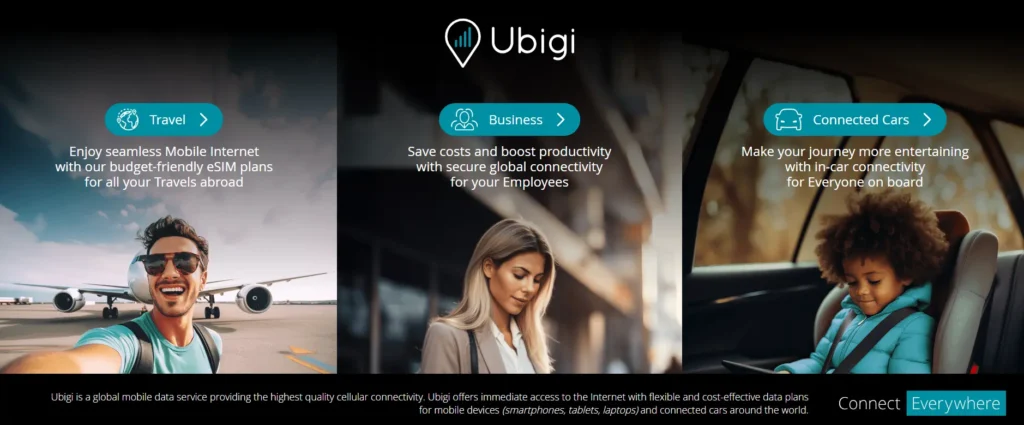
The proof is in the places the brand does not advertise. Transatel connectivity ships embedded in BMW and MINI vehicles across 27 European countries, in Toyota connected cars in Brazil and Argentina, and in Stellantis and Jaguar Land Rover fleets.

Car manufacturers do not buy connectivity from resellers. They buy it from operators who can sign a ten-year contract and guarantee a service level.
Three practical things follow from that structure, and they are the reason experienced travellers keep choosing Ubigi.
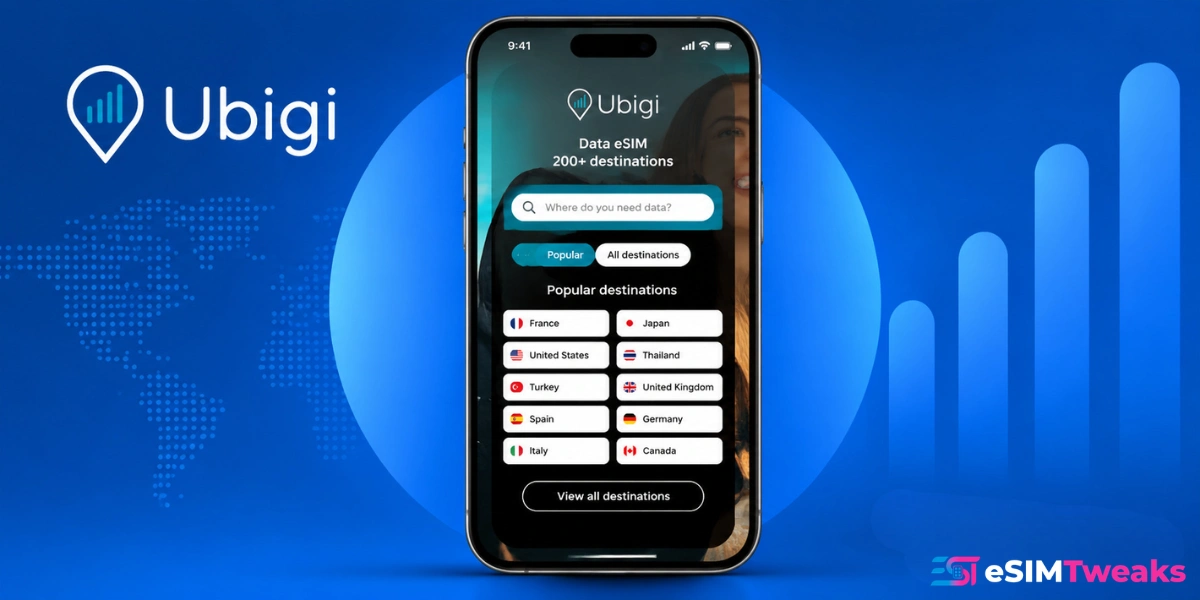
Ubigi coverage comes with a published network list. T-Mobile in the USA. EE and Three in the UK. KDDI and NTT Docomo in Japan. AIS and TrueMove in Thailand.
Reliance Jio in India. Optus in Australia. SK Telecom and LGU+ in Korea. Altán, Movistar and Telcel in Mexico. That list is on Ubigi’s own site, country by country. Most rivals say “the best local networks” and refuse to elaborate.
It routes traffic through a home-country IP by default. Google, Netflix and banking apps behave as they do at home rather than deciding you have moved to Hong Kong.
It is switchable to a local IP in one tap when you want local content. This sounds minor until a bank locks an account because the login came from a Singapore address.
You can buy a plan with no data and no WiFi. Once a Ubigi profile has been installed once, the app can reach Ubigi’s servers through a captive channel even when your plan is dead.
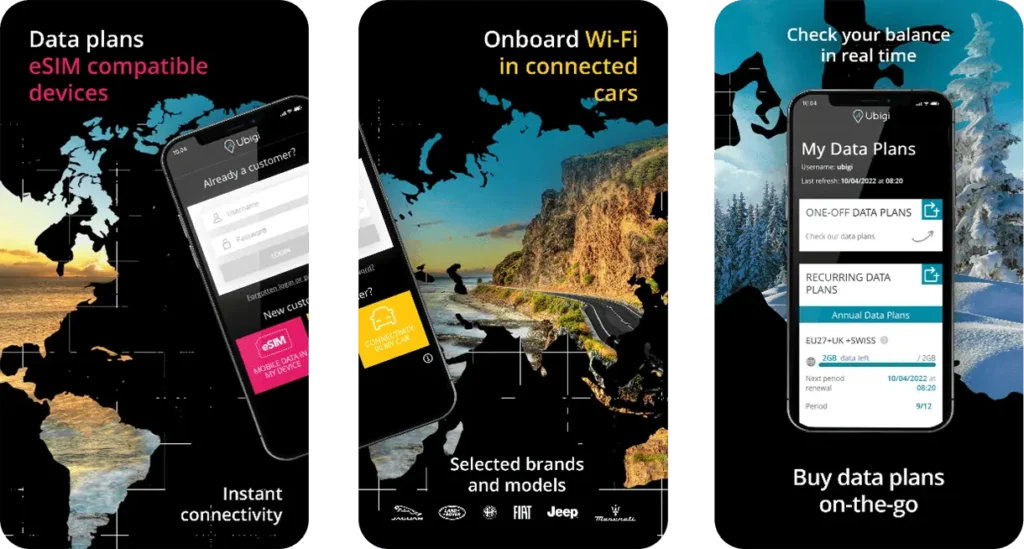
Standing on a street in Shinjuku at midnight with an expired plan and no WiFi, that is the difference between a working phone and a paperweight. No other major brand does this.
Speed and real-world performance
Ubigi’s speeds are carrier-grade because the underlying access is carrier access.
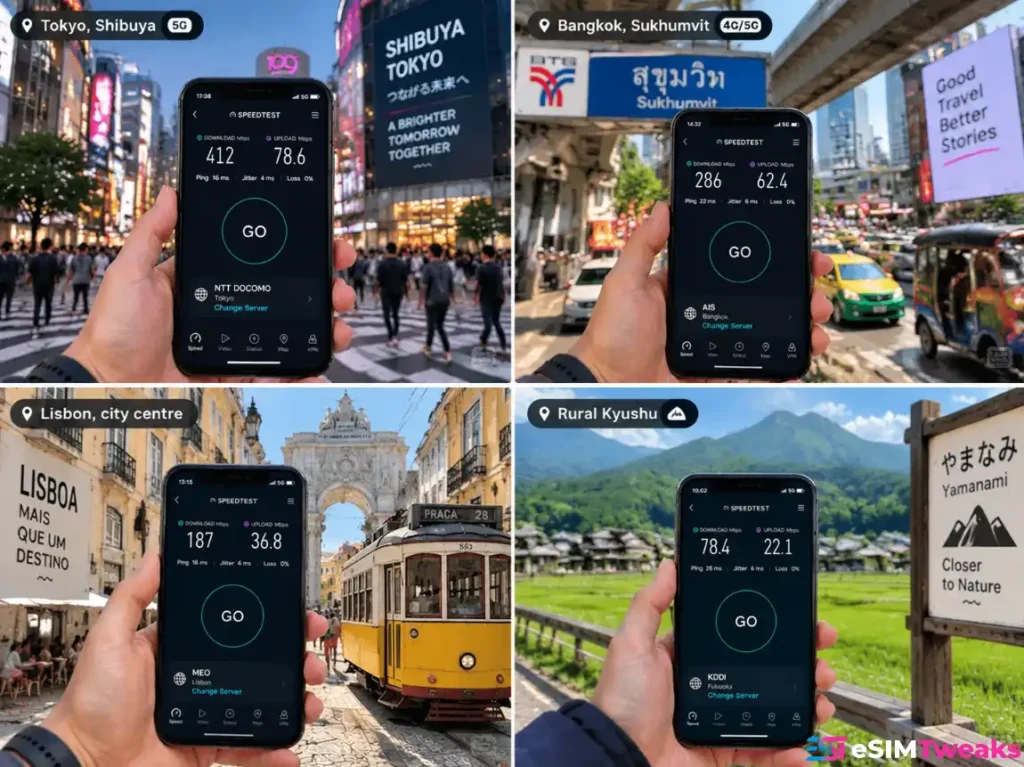
Independent testing across Tokyo, Osaka, Kyoto, Hiroshima, Kumamoto and Okinawa put Ubigi in Japan at 30 to 80 Mbps on download and ranked it first overall against every mainstream rival.
A single 5G reading in Kyoto reached 550 Mbps down and 55 Mbps up, which is the highest figure anyone has published for a travel eSIM anywhere.
The countryside is where the carrier relationship shows. Riding KDDI and Docomo means rural Japan holds signal where aggregator eSIMs on a single secondary network drop out. The same pattern holds across Western Europe.
Two honest caveats on those numbers. Ubigi is not the outright fastest in Japan; Solis and Japan Wireless edge it on raw 5G. And point-in-time speed tests are close to useless for judging Ubigi specifically, because its worst behaviour is not slow speeds.
It is full bars and zero throughput, which a speed test simply fails to run at all.
Ubigi plans and pricing
Ubigi pricing splits three ways: one-off country plans, regional bundles, and monthly subscriptions.
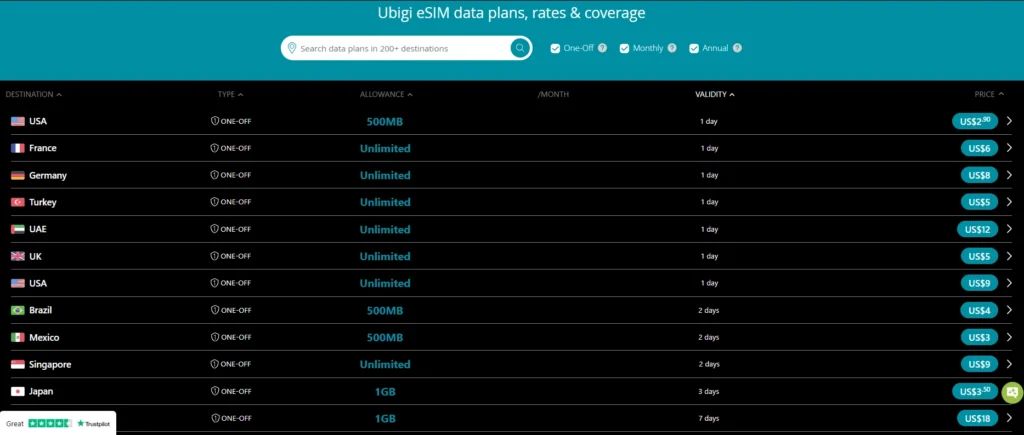
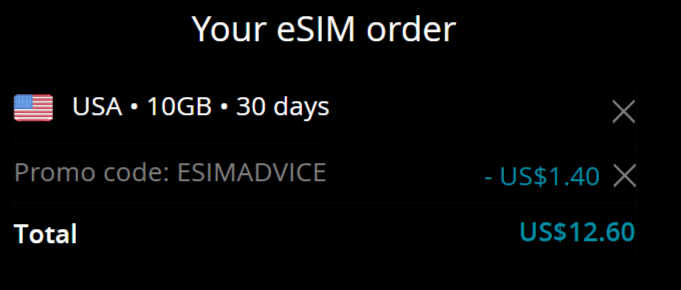
Prices below are the US storefront list price for a 10GB month, with ESIMADVICE applied and the resulting cost per gigabyte.
| Destination | Host networks | List | With ESIMADVICE | Per GB |
|---|---|---|---|---|
| France | Orange, Free, SFR | $10.00 | $9.00 | $0.90 |
| United Kingdom | EE, Three | $11.00 | $9.90 | $0.99 |
| Italy | Iliad, WindTre | $12.00 | $10.80 | $1.08 |
| Spain | Orange | $12.00 | $10.80 | $1.08 |
| Germany | O2 Telefónica | $12.50 | $11.25 | $1.12 |
| Vietnam | VNPT | $12.90 | $11.61 | $1.16 |
| Thailand | AIS, TrueMove | $13.90 | $12.51 | $1.25 |
| United States | T-Mobile | $14.00 | $12.60 | $1.26 |
| South Korea | SK Telecom, LGU+ | $14.00 | $12.60 | $1.26 |
| Singapore | StarHub, Simba | $14.00 | $12.60 | $1.26 |
| Turkey | Türk Telekom, Turkcell | $14.00 | $12.60 | $1.26 |
| Europe, 38 destinations | multiple | $15.00 | $13.50 | $1.35 |
| Japan | KDDI, NTT Docomo | $16.50 | $14.85 | $1.49 |
| Canada | Bell, Telus, Videotron | $19.00 | $17.10 | $1.71 |
| Brazil | TIM, Vivo | $19.00 | $17.10 | $1.71 |
| UAE | du | $21.00 | $18.90 | $1.89 |
| Best Asia, 17 countries | multiple | $28.00 | $25.20 | $2.52 |
| Mexico | Altán, Movistar, Telcel | $29.00 | $26.10 | $2.61 |
| Best Africa | multiple | $30.00 | $27.00 | $2.70 |
| Best World, 200+ | multiple | $39.00 | $35.10 | $3.51 |
| Best Middle East | multiple | $39.00 | $35.10 | $3.51 |
Western Europe is where Ubigi is genuinely excellent value. France at 90 cents a gigabyte with the code is the best price in this table and among the best anywhere. The UK, Italy, Spain and Germany all land near a dollar.
One structural oddity worth knowing before you shop. There is no one-off 20GB plan anywhere in the catalogue. The tiers step from 10GB straight to 25GB.
Twenty gigabytes exists only as a monthly subscription with a three-month minimum, so anyone comparing a “20GB” price is being routed into a contract without noticing.
The unlimited plans, and the Japan problem
Ubigi does not use a daily cap. It gives you a volume of full-speed data across the whole plan period, then holds you at a reduced speed for the remainder.
For a traveller who wants one heavy day rather than an even spread, that is friendlier than a daily model.
| Plan | Period | Full speed | Then | List | With code |
|---|---|---|---|---|---|
| United Kingdom | 7 days | 25 GB | 2 Mbps | $21 | $18.90 |
| Europe | 7 days | 25 GB | 2 Mbps | $23 | $20.70 |
| Australia | 7 days | 20 GB | 2 Mbps | $24 | $21.60 |
| United States | 7 days | 25 GB | 2 Mbps | $25 | $22.50 |
| Japan | 7 days | 15 GB | 1 Mbps | $25 | $22.50 |
| United States | 15 days | 30 GB | 2 Mbps | $39 | $35.10 |
| Mexico | 7 days | 20 GB | 2 Mbps | $45 | $40.50 |
| Thailand | 30 days | 60 GB | 2 Mbps | $55 | $49.50 |
| Europe | 30 days | 60 GB | 2 Mbps | $62 | $55.80 |
| Best Asia | 30 days | 60 GB | 2 Mbps | $66 | $59.40 |
| India | 30 days | 60 GB | 2 Mbps | $68 | $61.20 |
Two Mbps is the most generous throttled speed in the entire category. Most rivals drop to 1 Mbps, and several go to 512 or 256 kbps. At 2 Mbps you keep maps, messaging, email and video calls. That is a real advantage and Ubigi deserves credit for it.
Now look at the Japan row.
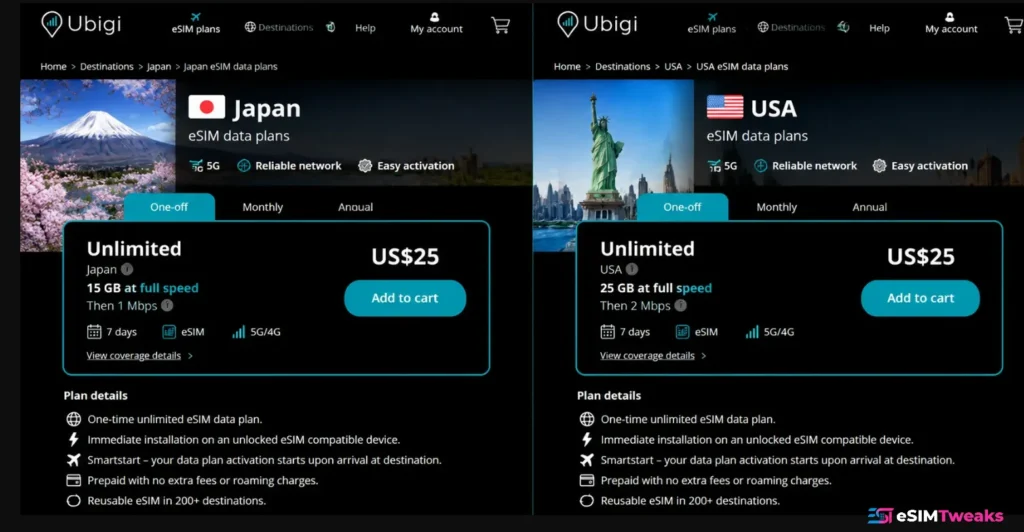
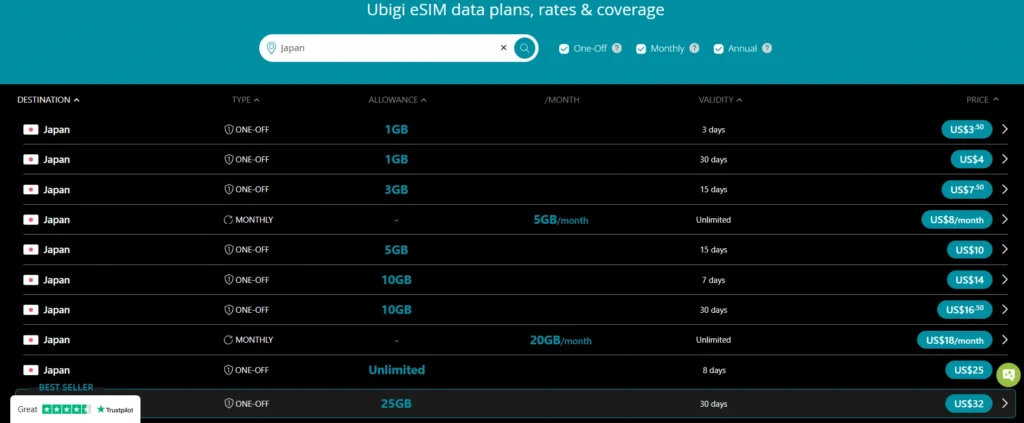
Japan gets 15GB where the USA gets 25GB, and drops to 1 Mbps where everyone else drops to 2 Mbps, at exactly the same $25. A Japan buyer pays 67% more per gigabyte of full-speed data than a USA buyer, and then gets half the fallback speed. Japan is Ubigi’s flagship destination and the one it markets hardest.
Worse, there is no central table anywhere that lists these thresholds. To find out what your plan actually gives you, you have to open the individual plan page and read the small print under the price.
The general fair use page says only that speeds “may” be reduced “after a certain data usage” and gives no numbers at all.
That is the single most common complaint about Ubigi, and it is a disclosure failure rather than a product failure. The limits are published. They are just published where nobody looks.
Where Ubigi is genuinely bad?
This is the section most Ubigi reviews skip. There are eleven real problems, and some of them are serious.
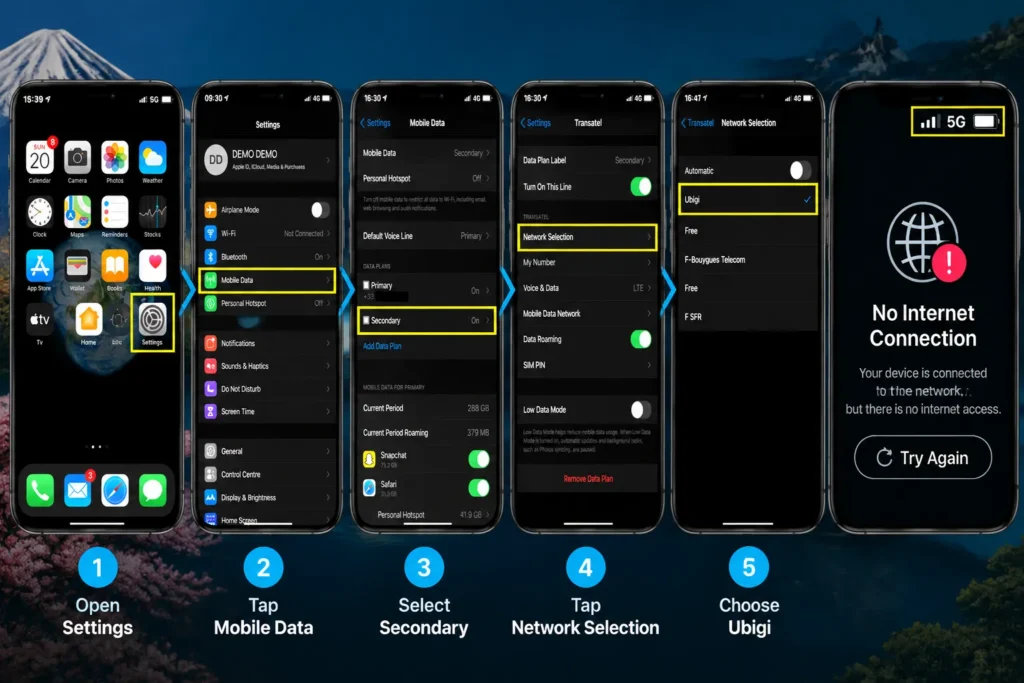
This is the most-reported Ubigi fault by a wide margin, and it is nastier than a simple outage.
The phone registers on the host network, shows 5G and fouMy Ubigi eSIM profile is installed and actir or five bars, and moves no packets.
Every troubleshooting step a traveller knows is useless, because nothing looks broken.
Reports cluster in Tokyo, Taipei, Thailand and rural driving corridors. It points at Ubigi’s own core rather than the local radio network, which is exactly the layer a customer cannot fix.
In Turkey this is a regulator action hitting most eSIM sellers.
In the UAE it is Ubigi-specific and unexplained. Either way the consequence is the same and it is severe: you cannot buy, install or top up while you are in either country.
The feature Ubigi markets hardest, buying data without data, fails in the two places you would most want it. Buy and install before you fly, or bring a second provider.
Ten gigabytes for a month costs $29 in Mexico against $14 in the USA and $10 in France.
The 7-day unlimited plan is $45 against $25 in the USA, and it comes with a lower 20GB threshold.
Mexico also shows no 5G on the plan page while appearing on Ubigi’s 5G country list, so treat 5G there as unreliable.
Middle East 1GB for 30 days at $19. Middle East 3GB for 15 days at $38. Americas 1GB for 30 days at $15.
Ubigi sells 1GB in Turkey for $4 and in the UAE for $5. The regional bundle costs four times the equivalent country plan for the same data.
Nobody should buy these, and they should not still be in the catalogue.
Best Africa unlimited for 30 days runs $129. Best Middle East runs $149.
Coverage complaints from Tanzania and South Africa are among the harshest on record, including travellers left without navigation entirely.
Ubigi rides Reliance Jio alone. That is a good network, but there is no fallback if Jio is weak where you are, and the whole country is 4G only on Ubigi.
T-Mobile only. When T-Mobile had an outage on 27 July 2026, Ubigi lines in Arizona and Utah stayed dead for days after other traffic recovered.
Ubigi does not get 5G on Google Pixel devices at all, on any model, because of carrier whitelisting on Google’s side. Pixel owners get 4G everywhere.
At least one Pixel 10 owner could not get a connection at all. This lines up with the app store gap: 4.6 on iOS against 3.8 to 4.0 on Google Play.
It is explicit that a refund is possible only if no data has been used. Not a fair-use proration. One megabyte and the refund is gone.
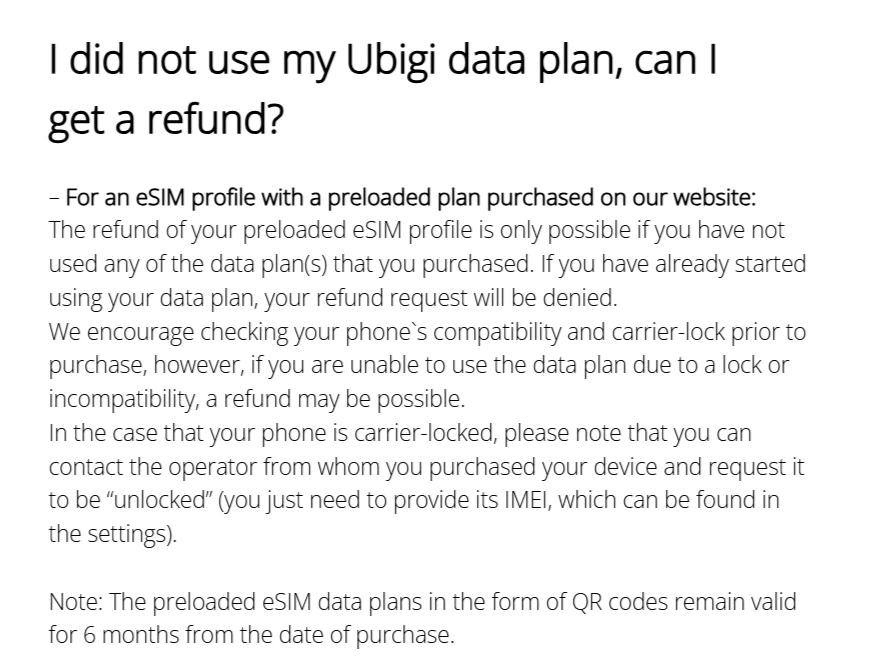
Since the signature failure only becomes visible after you have installed and connected, the refund window has usually closed by the time you know there is a problem.
Annual plans cannot be cancelled or refunded at all during their twelve months.
No phone number. No in-app support, so you have to reach the website, which is blocked in Turkey and the UAE.
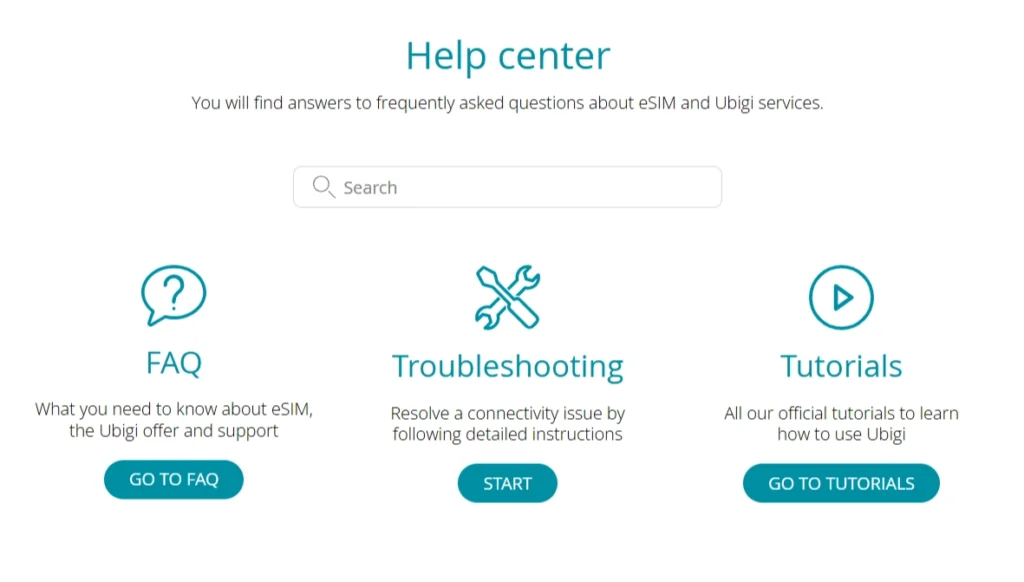
The front line is an AI assistant that by Ubigi’s own description cannot see your account.
Behind it sits a ticket form. Response times run from around eleven minutes in European business hours to a week in the bad cases.
Ubigi replies to 99% of negative reviews, usually within a day, and travellers consistently report the replies do not resolve anything.
A global outage on 4 June 2026 broke installations worldwide and left customers who had paid with no profile and no QR code. Ubigi confirmed it.
Earlier, a DNS failure across Japan and Korea in September 2024 left domains unresolvable while raw IP addresses still worked. And one more that sits outside the numbered list because it is rarer but worse.
A family on a 30-day Extended Europe unlimited plan used 130GB over 25 days across three devices with tethering that Ubigi permits, and the plan vanished from the app entirely. Not throttled. Removed.
The stated reason was that the usage did not correspond to standard use. There is no such clause in the published fair use policy. If your trip depends on sustained heavy tethering, that risk is real.
Ubigi vs Airalo
This is the comparison most buyers are actually making.
| Feature | Ubigi | Airalo |
|---|---|---|
| Structure | Full MVNO, own core network | Aggregator, resells wholesale capacity |
| Names host networks | Yes, per country | No |
| Fair use model | Volume per period, 15 to 60 GB | 3 GB per day |
| Throttled speed | 2 Mbps, 1 Mbps in Japan | 1 Mbps |
| Japan 10GB, 30 days | $16.50, $14.85 with code | Comparable, with a 5GB tier Ubigi lacks |
| Buy with no data | Yes | No |
| IP geolocation | Home country by default | Varies |
| Refund after use | Never | Within 30 days if unused |
| Support | AI first, ticket form, no phone | 24/7 chat, faster in practice |
| Rural coverage | Stronger, especially Japan | Weaker on secondary networks |
Choose Ubigi if the trip is Japan, Korea, Australia or Western Europe, if you will be outside cities, if you need a home-country IP for banking or streaming, or if you want the ability to top up when you have run dry.
Choose Airalo if you want lower entry prices and smaller tiers, if you are on a Pixel, if support responsiveness matters more than raw speed, or if the destination is one where Ubigi’s regional pricing is poor. Airalo also offers a 5GB monthly tier in several countries where Ubigi jumps from 3GB to 10GB.
Our Airalo review covers it properly, and Airalo vs Saily covers the other pairing people weigh at the same time.
The honest summary is that Ubigi is the better network and Airalo is the better company to deal with when something goes wrong.
Ubigi vs GigSky
A closer fight than it looks, and the two are often grouped together as the cheaper carrier-adjacent option.
| Feature | Ubigi | GigSky |
|---|---|---|
| Unlimited model | 15 to 60 GB per period, then 2 Mbps | 3.5 GB per day, then unstated |
| Hotspot | Allowed, no separate cap | Unlimited, any number of devices |
| Names host networks | Yes | No |
| Coverage | 200+ destinations, 5G in 67 | 200+ destinations |
| Japan unlimited | Yes, 15GB then 1 Mbps | Does not sell unlimited Japan |
| Cheapest entry | $2.50 for 1GB on Best Asia | From around $4.24 per day |
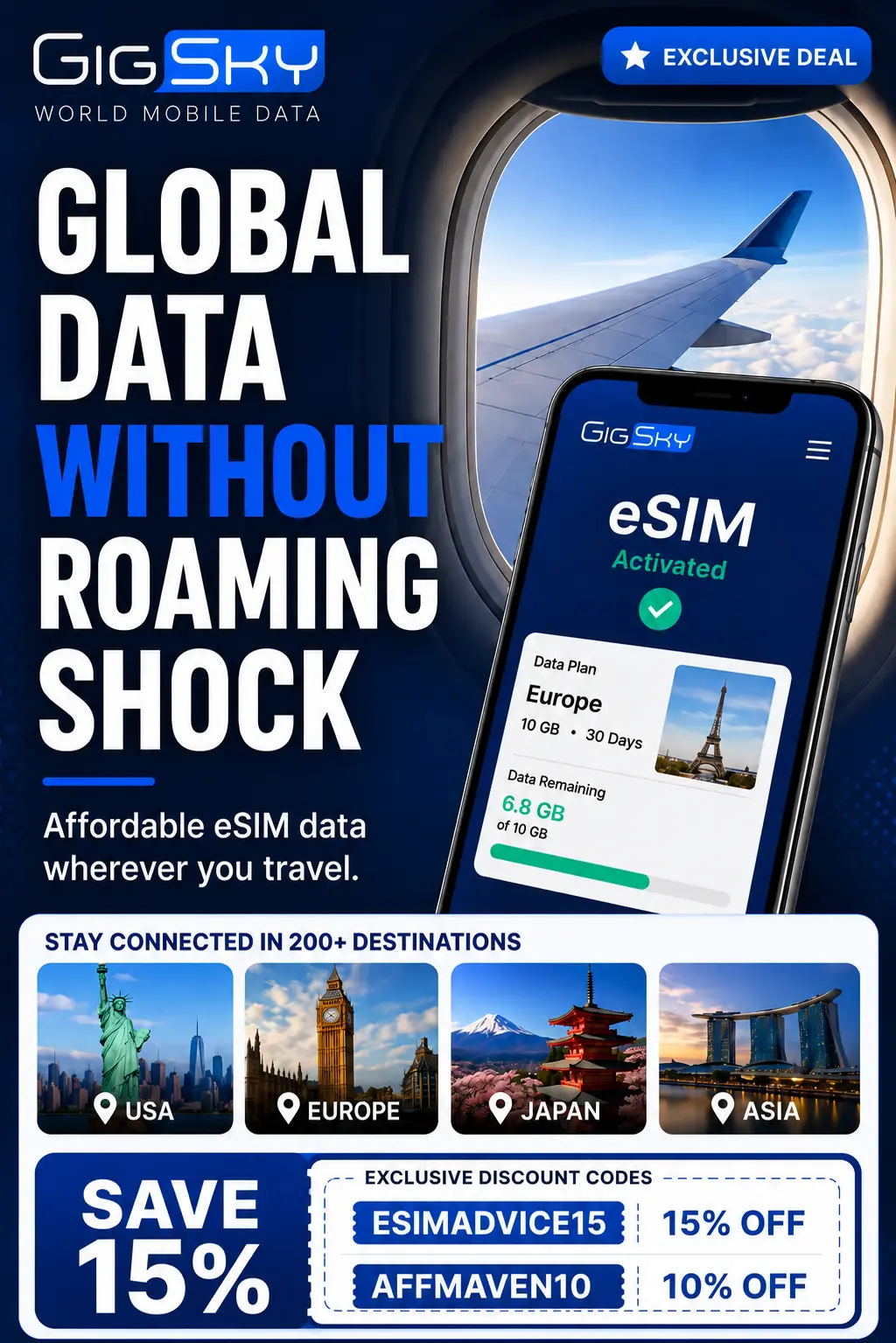
| Coupon | ESIMADVICE, 10% off | ESIMADVICE15, 15% off |
Choose Ubigi for a heavy single burst, because a 60GB pool across 30 days beats 3.5GB a day for anyone whose usage is uneven. Also choose it wherever knowing the host network matters.
Choose GigSky if usage is steady and predictable, if you tether constantly across many devices, or if the destination is one Ubigi prices badly.
GigSky’s 15% code also beats Ubigi’s 10%, which narrows the gap further on similar plans.
Our GigSky review has the detail and the GigSky promo code page carries the code.
Is Ubigi legit?
Yes, without qualification on that specific question. Transatel is a twenty-five-year-old French mobile operator with a named CEO, offices in seven countries, a public list of its network partners, and connectivity embedded in vehicles from four major car manufacturers.
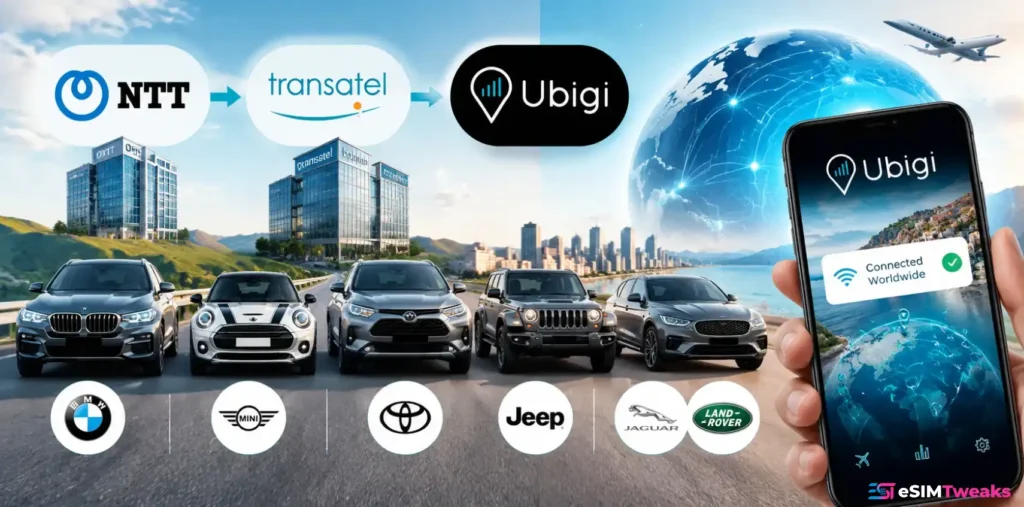
It is majority-owned by NTT, one of the largest telecoms groups in the world. It carries three million connections and holds a 4.1 Trustpilot score across more than 44,000 reviews.
The questions worth asking about Ubigi are not about legitimacy. They are about whether the support will be there when the connection fails, and whether the plan you are buying has the threshold you think it has.
Who should buy Ubigi, and who should not
How to buy Ubigi with the coupon?
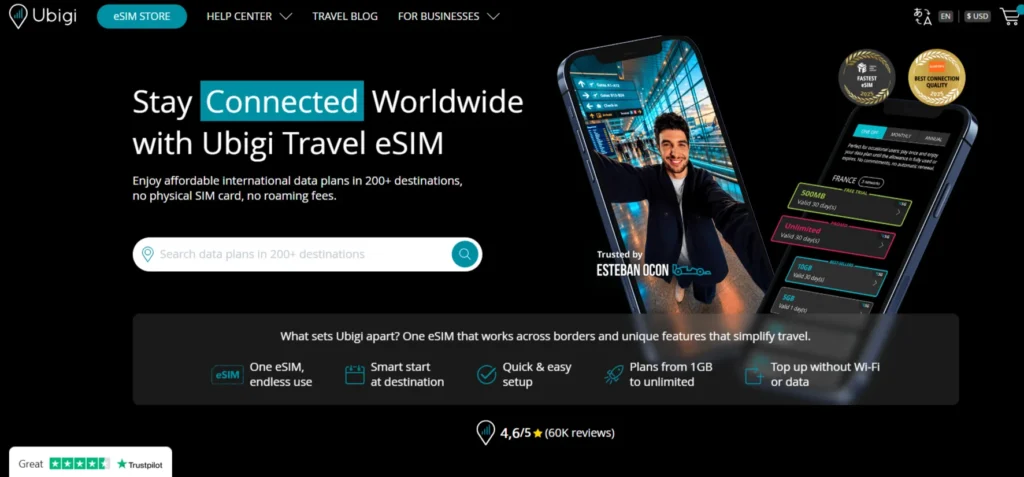
Step 1. Open the Ubigi site or app and pick your destination.
Step 2. Choose the plan. Check the fair use line under the price on unlimited plans, because the threshold is different in almost every country.
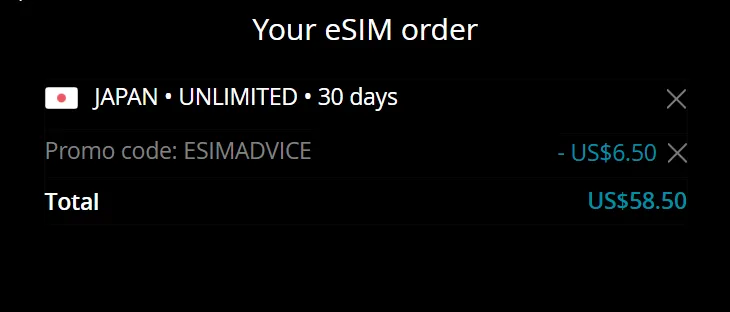
Step 3. Enter ESIMADVICE in the promo field at checkout and confirm the total drops ten percent before paying. The code does not apply to monthly subscriptions.
Step 4. Install the profile over WiFi at home. Ubigi’s SmartStart means the validity clock does not begin until you land in a covered country, so buying early costs nothing.
Step 5. Turn on data roaming. Ubigi needs it enabled everywhere. If nothing connects, set the APN manually to mbb, which is what Windows laptops usually require.
A solid choice for travellers needing dependable data in Mexico, especially with the current discount.
Frequently asked questions
Does Ubigi work without turning on data roaming?
No, and this catches people out constantly. Ubigi is a roaming product on every network it touches, so data roaming has to be switched on for the Ubigi line even though you are using a travel plan rather than your home carrier. Leaving it off produces exactly the symptom people panic about: an installed profile, a network name in the status bar and no traffic.
How many times can a Ubigi eSIM be reinstalled?
Five, and then no more. After five reinstalls the profile is spent and support has to issue a new one, which means a ticket and a wait. Anyone who habitually deletes eSIMs to tidy up their settings should stop doing it with this one. Delete it once too often at an airport and there is no self-service route back.
Does unused Ubigi data roll over to the next plan?
No. Whatever is left disappears at the end of the validity period and cannot be moved, refunded or credited. Ubigi also expires an unactivated plan six months after purchase, so buying several in advance for a year of travel is a bad idea.
Can a Ubigi plan be used at home rather than abroad?
Mostly yes, with two written exceptions. The World plans cannot be used in Canada by Canadian residents or in the UAE by UAE residents. Those are anti-permanent-roaming clauses and they are enforced, so a Canadian buying a World plan for use at home will find it does not work.
What happens when a Ubigi monthly plan payment fails?
The plan cancels itself silently. An expired card or a declined payment ends the subscription without a warning that reaches you reliably, which means the connection simply stops mid-trip. Monthly plans also carry a three-month minimum before you can cancel, so the commitment runs in one direction.
Does Ubigi give a phone number or SMS?
No. It is data only, everywhere, with no voice, no SMS and no local number. Bank verification codes sent by text will not reach it, which is why the home SIM should stay active in the second slot. This is standard across travel eSIMs, but Ubigi’s product pages are vague enough about it that a steady trickle of buyers are surprised.
Is Ubigi good for a long stay of two or three months?
It is one of the better options, with monthly subscriptions and multi-month plans that most rivals lack. The catch is the three-month minimum commitment and the auto-renew, so read the terms before treating it as a flexible arrangement. For stays past ninety days in one country, a local SIM will almost always be cheaper.
Why does Ubigi cost so much more in some countries than others?
Because Ubigi pays a different wholesale rate in each market and passes it through with an uneven margin. That explains France at 90 cents a gigabyte and Mexico at $2.61 for the same volume. What it does not explain is the legacy regional bundles selling 1GB for $19 when the country plan next to it sells 1GB for $4. Always price the country plan before the regional one.
Ubigi
Ubigi offers a 3GB data plan for $9.00, valid for 30 days, with access to Telcel and Altan Redes networks in Mexico. It’s ideal for vacations, road trips, and remote work, and comes with a 10% discount.
- Hotspot
- No
- Calls
- No
- Discount
- 10% OFF with code ESIMADVICE
The verdict
Ubigi is a genuinely different product in a category full of identical shop fronts. It owns its network, publishes its partners, gives you the most generous throttled speed in the business, and lets you buy data when you have none. In Japan and Western Europe it is close to the best thing you can put in a phone.
It also has a failure mode that leaves travellers stranded with a phone that looks perfectly healthy, a refund policy that expires before that failure becomes visible, a support operation built around an AI that cannot see your account, and a catalogue that contradicts itself on price in at least four places.
Roughly one buyer in eight leaves a one-star review. That is not a broken company across 44,000 reviews, but it is not a rounding error either, and their trips were damaged.
Our verdict: buy it for the right countries, with the code, and never as your only connectivity. Carry a cheap second eSIM from a different provider on any trip that matters. That advice applies to every brand in this category, and it applies to Ubigi more than most, because when Ubigi fails it does not tell you it has failed.
Why trust eSIMTweaks.
59 providers tested.
388 speed tests run.
20 countries covered.
More like this
About the author

Ali has bought the wrong eSIM in enough airports to make it a personal mission that you don’t. He handles reviews and price-tracking at eSIMTweaks — catching providers who quietly charge triple for the same gigabyte and pulling coupon codes the second they stop working. He trusts a speed test over a marketing deck and a live price over a five-star badge, every time.